
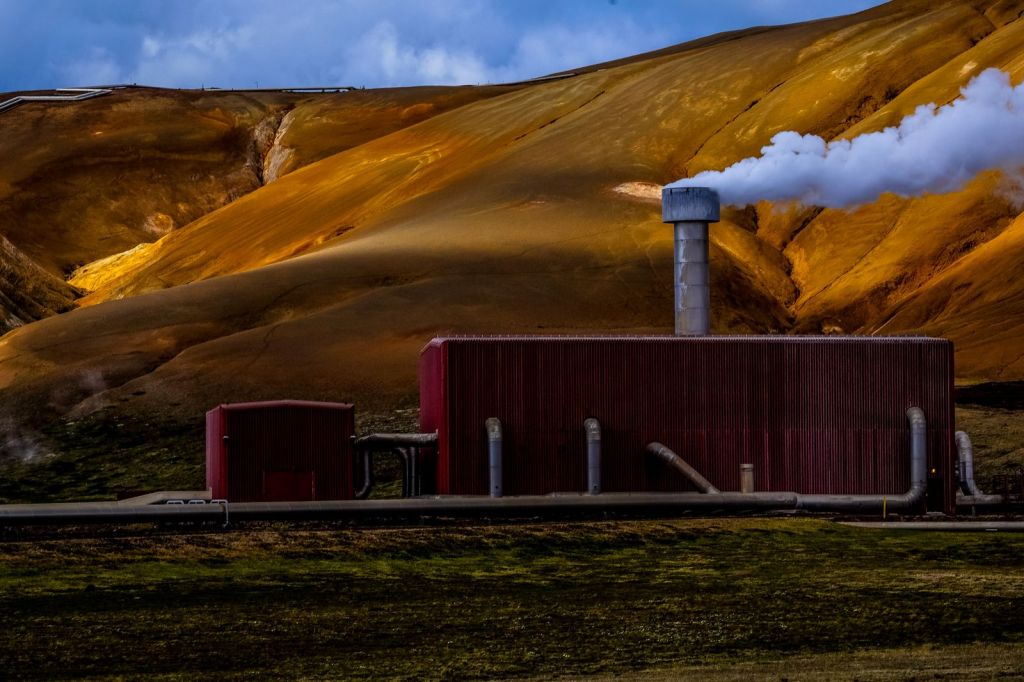
Geothermal power is drawing renewed attention from planners and investors in the volcanic belts of East Africa and Southeast Asia, valued for firm, low-carbon baseload that complements variable solar and wind without fuel imports.
The countries with the largest resources have long experience — geothermal already leads generation in Kenya and forms a large fleet in Indonesia and the Philippines — and new drilling programmes, plant expansions and smaller binary units are advancing.
The hurdle
Exploration and drilling risk: wells are expensive and outcomes uncertain, so risk-mitigation facilities, government-led drilling and phased development remain central to bringing private capital in. Read our Kenya and Indonesia guides.
Supply-chain notes
Drilling rigs and services, steam-gathering systems, turbines and binary units, and transmission from remote fields. Local capability in drilling and plant operation is a growing competitive factor.
More in our power generation section.
Background: a proven baseload resource with a development problem
Geothermal is the renewable that behaves like a thermal plant: it runs around the clock at capacity factors above 90 per cent, provides inertia and voltage support, and is unaffected by weather or fuel prices. Kenya already gets close to half its electricity from geothermal fields in the Rift Valley, Indonesia and the Philippines rank among the world’s largest producers, and Ethiopia, Tanzania, Djibouti and parts of Central America and Türkiye have significant untapped resources. The International Geothermal Association, IRENA’s geothermal work and the World Bank’s Global Geothermal Development Plan all describe the same barrier: the cost and risk of exploration drilling before a resource is proven.
Renewed attention comes from utilities that need firm, clean capacity to balance solar and wind, and from new risk-sharing tools — drilling funds, government-led exploration and geothermal development companies such as Kenya’s GDC — that take early-stage risk off private developers.
The hurdle, in more detail
- Exploration risk. Test wells cost millions of dollars each and can miss; public or donor-backed drilling programmes are the main mitigant.
- Long lead times. Five to ten years from surface studies to commercial operation is typical.
- Tariff and contract design. Geothermal needs long PPAs and often steam-supply agreements between field developer and plant owner.
- Grid connection. Fields are often remote, requiring new transmission and substations.
What it means for suppliers to utilities and OEMs
Geothermal is a specialised but stable supply chain: drilling rigs and services, wellhead equipment, steam-gathering systems, turbines and binary (ORC) units, cooling systems, corrosion-resistant materials, and plant control and monitoring. Wellhead and modular binary plants shorten time to first power and are attractive to utilities wanting incremental capacity. Because state agencies drive most exploration, suppliers should track national geothermal development programmes and development-bank projects on our power generation page, and note that qualification typically follows the utility procurement rules explained in How to sell to utilities in emerging markets.
Quick answers
Which emerging markets have the largest geothermal potential?
Indonesia, the Philippines and Kenya lead in installed capacity, with large untapped resources across the East African Rift, Central America and parts of Southeast Asia and Türkiye.
Why is geothermal slow to develop?
Exploration drilling is expensive and uncertain, projects take five to ten years, and fields are often far from load centres.
Sources and further reading
- IRENA — Geothermal energy — technology and cost data
- International Geothermal Association — global market data
- ESMAP — Geothermal — World Bank risk-mitigation programmes
- KenGen — Kenya’s geothermal fields
- EnergiTech Media — Energy infrastructure in Kenya — country guide
This article was researched and written by the EnergiTech Media editorial team and last reviewed in August 2026. We update country and sector guides as tenders, plans and regulations change. Spotted something out of date? Email support@energitechmedia.com.
 EnergiTech Media
Leave a comment